


Atlantic Creole Research & Documentation
- H.E. Ross

- Mar 31
- 10 min read
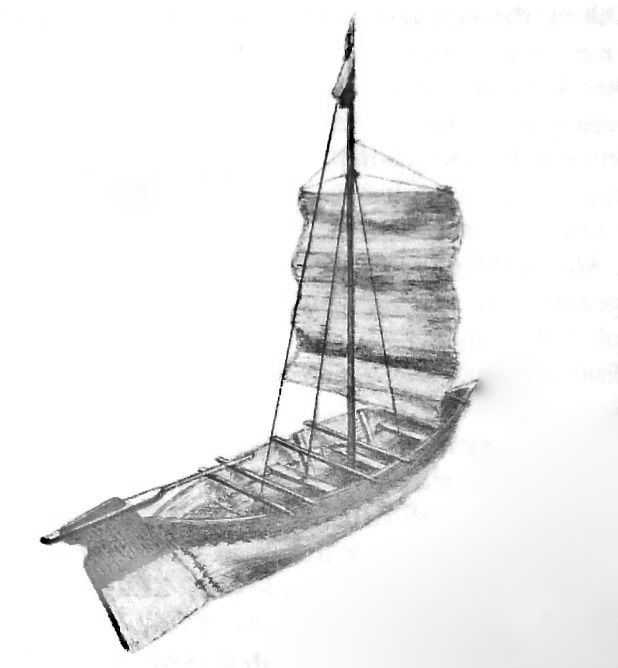
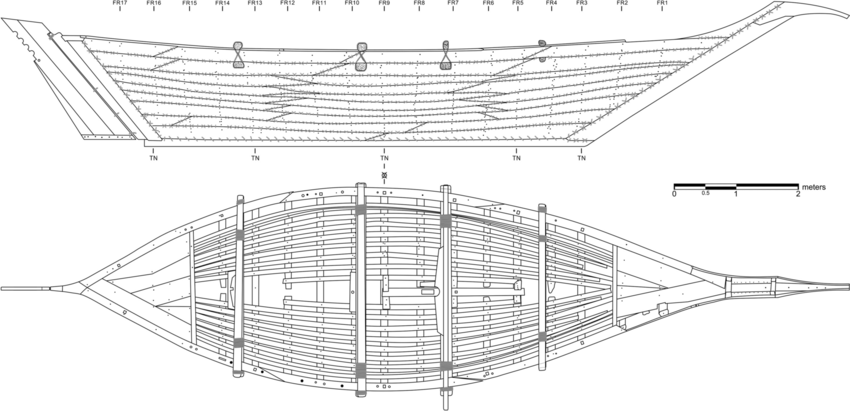
Mtepe by P. Bojakowski
Hoped For History-Van Sertima and Abubakari II
“In traditional Africa, Griots constituted a caste of individuals whose lives were dedicated to no other purpose than the keeping of history…the role of griots calls for a rigorous adherence to truth, regardless of whether it makes anyone feel good or bad.
“ In this situation we have to be Griots in our own right…” -Professor Dinizulu Gene Tinnie
Most of my life has been spent sailing a variety of boats from catboats with one sail to yawls, ketches and schooners with up to nine sails. I have navigated the rugged Pacific Coast from Canada to Panama and crossed the Caribbean from South to North and a few other voyages in that body of not so nice water. I have sailed in the Mediterranean from Africa to Europe and from Italy to Spain. I have also sailed the North Sea and navigated the Dutch and French Canals. That amounts to about 57 years of my 80 years on this blue planet. From that perspective and a little more from the view of historical research I write these words.
As a sailing African Diaspora man, Ivan Van Sertima’s work - They Came Before Columbus, started my interest in our sailing maritime history and heritage. That being said, after reading the book I became excited to know that I was not alone on San Francisco Bay as a Black man under sail. At the time there were three other Black men sailing on the Bay of over several thousand boats that we could reference. There was one doctor who would not talk to us so we didn’t count him and there might have been more that we hadn’t seen or heard of. But, when I showed the book to my sailing brothers we all were amazed that we might have had a history sailing boats on voyages, and of course we all thought it logical since Africa was defined as a continent by surrounding bodies of water.
That was the impact that Van Sertima had on me early in my sailing years and stayed with me to put me in the Caribbean teaching, no, preaching our heritage under sail. That extended itself to England and the world through Facebook up to the present day. I founded two maritime heritage preservation organisations and re-ignited one traditional vessel sailing club in the Caribbean and assisted the start up of one in San Francisco. The Van Sertima narrative was the continuing stimulus. Then I arrived at the point in my research, adding calculations to make me question the generally accepted history that maritime history started in Egypt. The simple chronological discrepancy facing our development of sailing vessels made no sense when a funereal vessel was the only vessel found in Africa. Humankind is stated as having the origin of human existence almost three million years before the Egyptian Khufu funereal vessel was set in its pit. My thoughts went to who built it and what was the history of the development of the skills to build the vessels it represented?
This forced me to look back at Abu Bakr II’s voyages and too many things things did not match up in Van Sertima’s accounting. Why? Because between 2500 BC, the date of the Khufu vessel’s build and the Abu Bakr II’s 14th-century departure there was very little reference to African oceanic boat and ship building. So, who built his ships? Who navigated them? and of course for a sailor a voyage is only counted when it ends safely, not just when it started and though the voyage might have taken place how did it end?
Jump to the other side of the Atlantic Ocean and we do have evidence of pre-Abu Bakr II Africanoid skeletal remains, implements and foods uncovered in Brazil, but how did they get there? What followed the thought of an Egyptian starting point was the question of what was Africa doing between 5 thousand years ago and 3.2 million years ago? And this led me to question the time difference between the Van Sertima’s assumption that Abubakari II arrived to start th
e Olmec civilisation, that had its height between 1400–400 BC and was not a presence as Olmec, but as the water people known as the Chontal Maya who trace a direct line to the Olmec. These were little naggings that I wanted to ignore followed by little hopes that I could just accept. After all, this whole quest to research and document and present started with this spark in an invisible history, let alone African maritime heritage preservation. But, in looking into the gigantic gap in maritime history that, like the bible, was created amongst the countries around the Mediterranean Sea, I had to look back at Van Sertima’s conclusion from the viewpoint of a sailor. I had to remember that the European and Middle Eastern societies had a long history of sailing by the time Abu Bakr II appears and that was introduced to movement over water under sail by West Africans and I will get to that later.
A little side story - while I was living in Mexico I travelled to the town of Ciudad del Carmen, located on the Island called Ciudad del Carmen. It was a rough town in those days but I was focussed on a boatwright I had heard about who was building historic Chontal Maya sailing canoas and I found him. I lost the notes and photos that I took of the interview in a shipwreck I suffered toward the end of my project. But, two things he pointed out were that his people, the Chontal Maya had an oral history of sailing routes around the Caribbean and the Gulf of Mexico. He said that for some reason the government did not recognise that history and he was building this boat to sell to the local museum. His canoa was a bit more elaborate than needed I felt at the time, but he knew more than I did.
The Chontal boatbuilder, who was originally from Tabasco, said that he was proud of his African ancestry without me being conscious of that African-Olmec controversy at that time. I was just interested in any pre-Columbian sailing history. He recommended that I go to the State of Tabasco and meet other Chontal canoa builders. I did go but could not find anybody who was building sailing canoas. Everybody was into cut end canoas with outboard motors.
Back to Van Sertina. His information on Abubakari II, or Abu Bakr II, was based on a scarcity of information on the kings of Mali during the 13th and 14th Centuries and his conclusions were based on the information that he could obtain. Further research, especially by Michael A. Gomez, François-Xavier Fauvelle, and Nehemia Levtzion based on oral and documented histories, through a lot of confusion and misinterpretation, have left me with the possibility that is was Mansa Qu or even Muhammad ibn Qu who might have made that voyage into the Atlantic? Now, that hurt. I loved the name Abubakari and here scholars were saying that somebody might have made that voyage but that person was never specifically named in the reference by Musa II with just the mention of a ‘predecessor’ left it for me to investigate. When you think about it back then if somebody sails off into the blue and never returns you might not consider that as an important history to tell future generations especially if you are a ruler trying to keep your people under your rule and not wandering off on adventures.
With that placed over to the side I come to the fact that whoever made the initial 200 vessel voyage there was no oral nor written history of a return. Nor for the second voyage of 2000 vessels with Abu Bakr II aboard was any mention of a return. Was that due to being no need since paradise was found on the other side, or they could not navigate back because of adverse current and winds or that their vessels were not the type constructed for a long voyage and did not reach anywhere? Maybe they did return but the king at that time might not have wanted them to be more famous than whoever was ruling then? Too many important unanswered questions.
Coincidentally, the matriarchal sea going Bijago people, who still inhabit an island group off the coast of today’s Guinea-Bissau, were known for their powerful pirate fleets and strong ocean going vessels while under the rule of the Mali Empire during the time of Abu Bakr II’s voyages. Later, in 1535 the still strong Bijago defeated a Portuguese slaver fleet. And the Portuguese were the rulers of the sea at that time. Their presence points toward three generally invisible aspects of the time, firstly they are not mentioned in references to Abu Bakr II and secondly, who else was around during their piratical times who also have sea-going vessels and my third question is how long did it take to develop their sea going abilities and skills at developing their vessels? When we erase the history timeline based on Columbus we can see more clearly that there must have been migrations to the Americas either by intent or accident that moved through the millenniums. And that they moved to the Americas with African origins from both the East and the West. That was how the population of this planet evolved and is evolving. When we focus on that particular voyage that lends itself to vessel construction in order to even imagine an ocean passage of unknown days we hit upon something that could open up a new range of research on planetary migration via water.
Why would anybody get in a boat that they felt could not sail great distances and why wait until the 13th or 14th Century to invent that boat after about 3 million years of a first habitation on the delta of an African continent surrounded by water and inundated by the stuff with lakes, ponds, rivers and deltas? Do we have to live with the concept that Africans were so dumb as not to ever have thought about sailing by some type of watercraft until the Arab type of Egyptians popped up out of nowhere with a Dhow, though the word is actually Swahili meaning boat?
Paradise ?
If that Malian band of adventurers ‘discovered’ South America and found it to be populated by civilisations with a more relaxed lifestyle generally who accepted them into their world without the many restrictions of the social and religious structures would they move in and stay without a thought of returning? along the lines of a large percentage of the Spanish Conquistadores? Maybe with the same warrior ethos or maybe not. The Mali empire was made from wars just as the Spanish one was over two hundred years later. But maybe they were all killed.
Currents and wind?

Around the mid section of the Earth both the North Atlantic and South Atlantic Currents move East to West at all times of the year following of the earth’s revolving West to East. They both turn at the mass of the Americas and revolve to return West to East to turn again and continue a rejoining of their cycles. There is a counter current between the two that is minimal compared to the main currents. The North Atlantic Trade Wind essentially follows the North Atlantic Current route but the South Atlantic wind route peels off where South America and the African Cape stops and develops into some high speed circling of the world. It is almost impossible for most recorded vessels up into the 18th Century to successfully sail back across from South America to Africa without taking a very long time. Both current and wind would be against them.
Vessel construction ?
Here lies the groping for an answer in that we do not know what types of vessels were doing long ocean passages during that period off the West African very long shoreline. This is also where I ended up moving over to the East Coast of Africa where vessels seemed to have a tradition that carried on into the 21st Century. Vessel designs, unlike car designs, do not change quickly since the demand is not as great and if it works only little bits of modification for more efficiency can be seen. That said, boat design seldom goes backward before the invention of engine and motor propulsion.

The various designs of the square sail Mtepe is a classic example of the slight measure of modification and is around up to today. Nobody knows when the first little open Dau La Mtepe stepped its mast and was pushed off into the sea. The lateen rigged double ender Beden of the Horn of Africa could have been the pre-runner for the Dhow with its sewn construction and high stern and versions are still used in Somalia. The Jalbut and Jahazi of Tanzania and Zanzibar respectively are ancient sea going vessels that refined the lateen sail rig and can still be found on the beaches of those two islands.
The only sailing vessels I found so far with an ancient history on the West Coast is the Bijagós Sailing Pirogues, an archipelago of Guinea-Bissau, that use both a square sail and a lateen type of sail pattern. These dug out and planked up canoas do coastal ocean navigation but there would be a lot of bailing if they were used for an Atlantic crossing. I will include the Kru for their coastal trading but I do not know of the use of sail on their more ancient designs.
The second reed boat of the Ra ‘Expeditions’ showed that it was possible to cross the Atlantic with anything with a sail that could float long enough. Alain Bombard did the same in an inflatable raft with a small sail. When you consider that the distance between Senegal and Brazil is only 1600 miles, a little less than the distance between Senegal and Nigeria then the perspective changes a bit since coastal ocean trading along any coast of Africa had established trading routes that were documented by when the Europeans arrived and relied upon by them. I might add that all sailors know that a coastal voyage is more worrisome than deep water crossing with considerations ranging from current problems to submerged uncharted rocks to something as simple as fog.
We don’t stop re-writing our history because some of it can be knocked. The reason for this writing is in the title, that Hoped For History can be a way of reducing the importance of just stating an event as a fact, but that statement of a fact that might not be completely reliable, but can still stimulate enough interest or curiosity toward further investigation and that in turn can broaden the reach of interest. I am now looking into the first migrations out of Africa via boat, sailing boat, and that was started by the fact that They Came Before Columbus changed, for me, into the fact that We Came Before.
Again, quoting one of the wisest men I know, Gene Tinnie, “ In this situation we have to be Griots in our own right…”

Comments